
Experimentation Elite: Space Academy 2026
Optimising in the AI Era: We Already Have a Universal Language
- Event
- Experimentation Elite: Space Academy 2026
- Duration
- 30m
About This Talk
I delivered the closing keynote at Experimentation Elite: Space Academy 2026 in London. I spent thirty minutes making the case that AI did not change what good websites look like. It made the difference impossible to fake.
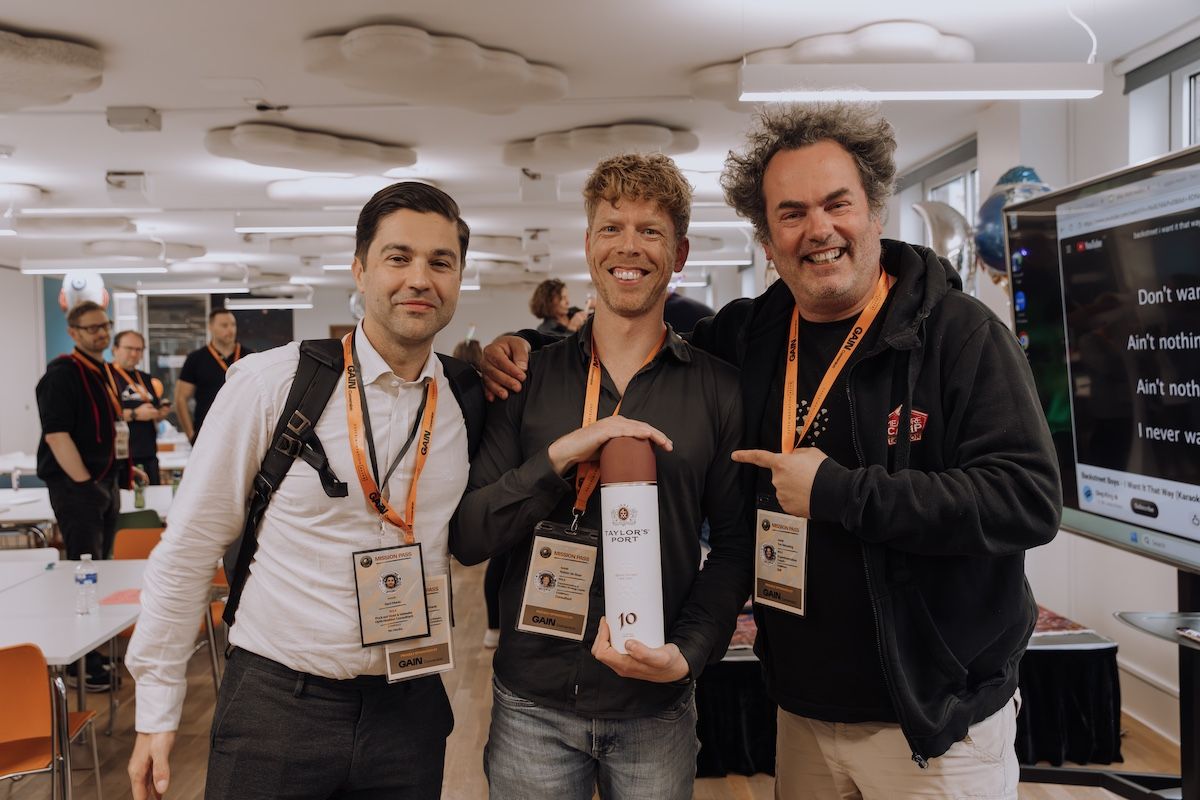
With Ruben de Boer (centre) and Ton Wesseling (right). Ruben walked away with the bottle of Taylor's Port for posting the highest score on No Hacks Space, the mobile game I built for attendees.
The opening receipts came from Cloudflare Radar. Non-human traffic is now 51% to 53% of all internet traffic and it is growing 8x faster than human traffic. The dominant search engine's crawler fell from 90% of all bot requests to 30% (the rest is everyone else now), and agent traffic specifically is 5.5% today. The web most websites were built for is no longer the only web. Most websites are not broken. They are unfinished.
If websites had DNA, most would match The Scream more closely than the machines that need to read them. They were built the same way the painting was: for humans to look at.
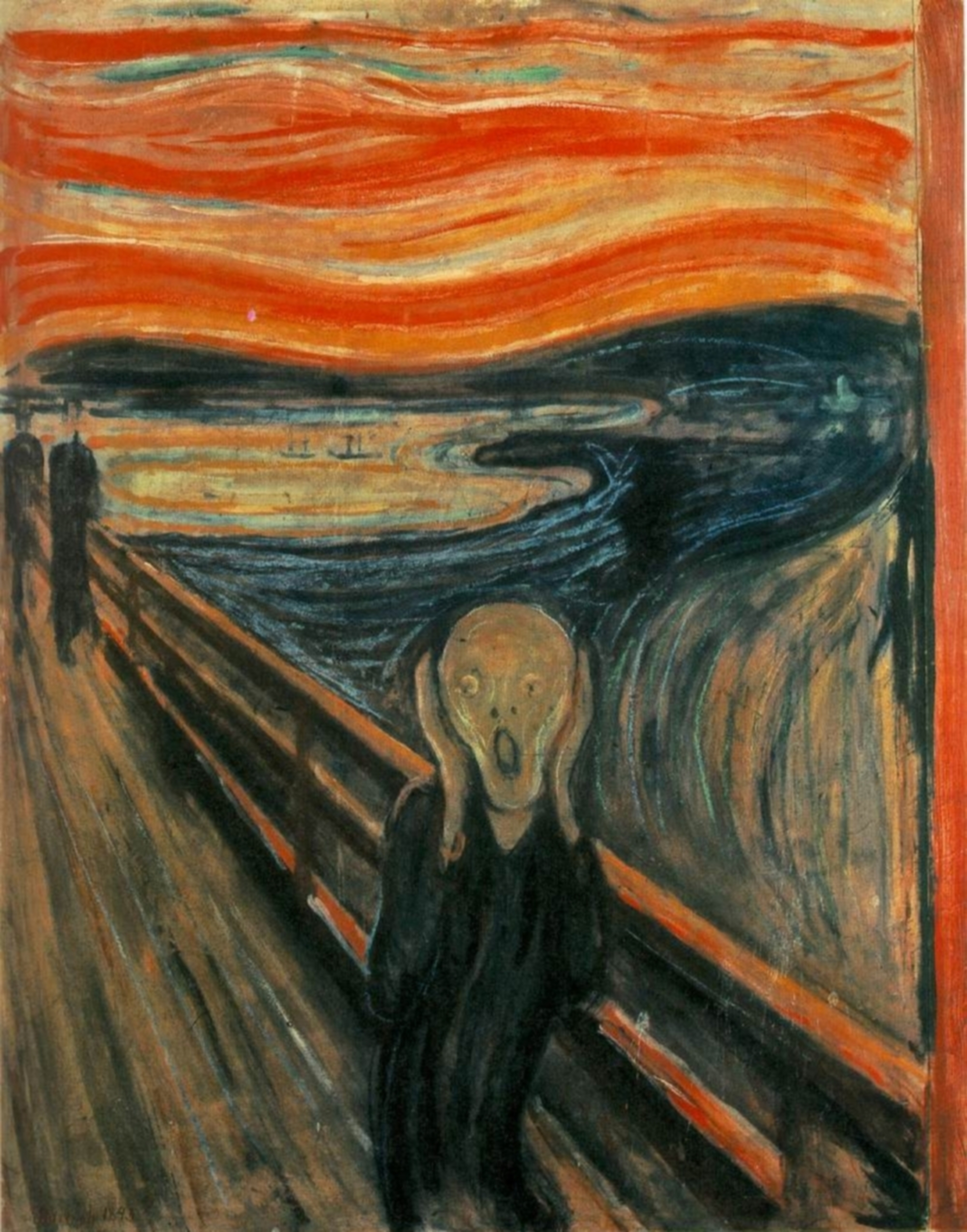
The Scream, Edvard Munch (1893). Public domain, via Wikimedia Commons.
That is the premise. The rest of the talk works through what to do about it.
Part 1: The Shift
I walked the audience through the timeline. 2024: people still browse the way they always have. 2025: every major tech company ships an AI browser inside a single 12-month window. 2026: people start sending agents to browse on their behalf.
To show what that looks like in practice, I demoed a real shopping task. I asked an AI assistant to find me a specific running shoe in a specific country in a specific size. It could not. The product page looks fine to a human (title, price, photos, colour). With JavaScript off, which is what most agents see, the size tiles render as empty rectangles, the "add to cart" button is greyed out, the product specs are gone, the reviews are gone, the delivery info is gone. The agent can identify the product. It just cannot buy it. That is the default state of the web right now, not an edge case.
I framed agent behaviour as four verbs: Consume. Analyze. Cite. Use. Every interaction an agent has with your site fits somewhere on that ladder, and how far down it goes is anyone's guess. What is not a guess is the preparation: semantic HTML, structured data, accessibility, and entity consistency across platforms. Same list whether agentic browsing stalls until 2030 or hits the mainstream in two years, and the same list I have been telling clients to fix for 15 years. We kept waiting for a hack that was never going to arrive.
Part 2: Machine-First Architecture
The pivot from "what is happening" to "what to do about it" runs on a mobile-first parallel that this audience feels viscerally. When the canonical mobile-first design book was published in October 2011, mobile traffic was 6.5% of the web. Today, agent traffic is 5.5%: same number, same decision to make. Start with the hardest visitor to serve, because everything you build for them works for everyone else too. Machine-first does not mean human-last. It means designing for the most constrained visitor (a machine that cannot interpret visual layout, guess at meaning, or recover from ambiguity) and letting every other visitor benefit from the foundation.
Machine-First Architecture has four sequential pillars. Each one builds on the one before, and if any one breaks, the ones above it stop mattering.
- Identity. Can machines unambiguously identify who you are? Machines learn who you are from maybe 30 sources, and your website is only one of them. Review sites, business directories, professional networks, podcast appearances, founder bios, every directory you forgot you were in. The model synthesises all of it, and that synthesis is your identity. The work is making sure that when a machine pulls from 30 sources, it gets one answer back. Better about-page copy is not the lever.
- Structure. Can machines extract your information? You saw it in the shopping-page demo. The price loads in JavaScript. The size picker is not really there until a script runs. Structure flips the design process. The first question is what data the page must expose. Layout follows. JSON-LD is now on over 40% of pages, and the pages that use it pack roughly six times more machine-readable detail than a decade ago. Adoption is there. What is missing is the discipline of getting the critical stuff into initial HTML before any script runs.
- Content. Will machines rely on what you are saying? Five rules carry this pillar: lead with the answer (44% of AI citations come from the first 30% of a page); be specific enough to be cited (adding real statistics improves citation rate by 41%); declare provenance as structured data; signal freshness at the claim level rather than the page level; and write self-contained sections that survive being extracted on their own. The single action to take this week is to rewrite the first 200 words of your five most important pages so the citable claim sits in the first sentence or two.
- Interaction. Can machines act on your website autonomously? Visibility is a solved problem. Accessibility is a solved problem. What this pillar covers is what happens when an agent arrives with a task, with money, with a human waiting for an answer. A human sees a button and knows it is clickable. An agent needs the button declared as a button, with an action it can perform, inputs it knows how to provide, and a structured response it can read back. WebMCP gives websites a standard way to declare exactly that: what an agent can do on the page, with what inputs, and what to expect back. The broader MCP ecosystem went from spec to rapid adoption in a year. Major commerce platforms are now exposing MCP servers, and orders from AI-powered search have multiplied many times over in 12 months. Open agentic-commerce protocols are processing real checkouts inside chat interfaces. The pipes are being laid in public.
The pillars are sequential, and the dependency runs all the way down. If Identity breaks, no Structure saves you; if Structure breaks, no Content saves you; if Content breaks, no Interaction saves you. None of this is a redesign or a rebuild. Most of it is one HTML attribute, one JSON file, or one afternoon of checking what five platforms say about you. The work is small; the decision is the hard part.
Part 3: The New Lane
To show what winning looks like at the other end of the framework, I told a true story about a developer-tools company that became the default backend for vibe-coded apps. I asked five different AI models the same question, "Suggest a database provider for my task management web app", and all five returned the same name: five different companies, five different training sets, five different architectures, one synthesised winner.
In one year, that company went from 1 million to 4 million developers, from $30M to $70M annual recurring revenue (250% year over year), and from roughly $765M to $5B valuation. Nobody on their team pitched any of those AI tools. Their backend gets provisioned automatically every time a developer types "build me an app". That is AI making a sourcing decision at the moment of intent, outside SEO, outside any partnership deal, multiplied by millions of intents a week.
And underneath the growth, the mechanism. In January 2026 their CEO posted that 73% of the people reading their documentation are not people. Across the broader documentation-platform ecosystem, 48% of docs traffic is now agents. The loop compounds. Every agent that reads the docs is another agent that recommends them. Documentation is not documentation anymore. It is an API for the AI to learn from.
That company did not build their identity from zero. They attached themselves to two entities the machines already trusted: a positioning that borrowed an incumbent's recognition, and a stack rooted in a 25-year-old database every AI model already had a node for. Identity done on purpose, treated as an entity decision rather than a tagline.
The objection from any non-developer audience is "that is a dev tool, this does not apply to me". My answer: tech is always first. Cloud was a developer-only thing in 2006 and by 2015 every bank, retailer, and hospital was on it. A/B testing was a top-tier-platform practice in the early 2000s and by the mid-2010s every marketing team had an experimentation function. SaaS was a dev trend in the early 2000s and by the mid-2010s it was how every department in every company bought software. AI-as-distribution in 2026 is dev tools. In 2028, 2029, 2030 it is e-commerce, travel, insurance, B2B software, media. Your industry.
AI is in the business of picking winners. The question is whether one of them will be you.
And one corrective before the close: this is additive. SEO, paid, email, content, and social all still work, and they will keep working. The new lane sits alongside the existing playbook, not on top of it. Every other lane changes because of this one (search results shaped by AI summaries, ads competing with AI recommendations, support tickets filtered by agents before humans see them, content read by machines first), but the existing playbook does not get thrown out. You strengthen the foundation, and you start showing up in the new lane too.
Key Topics Discussed
- 2025 as the year every major tech company shipped an AI browser, in a single 12-month window
- The 52-week shift in human, AI bot, and search-engine crawler traffic share
- A live walkthrough of a major retailer's product page with JavaScript off, the way an agent sees it
- The four agent verbs: Consume, Analyze, Cite, Use
- Mobile-first in 2011 (6.5% traffic) and agent traffic today (5.5%) as the same inflection point
- Machine-First Architecture: Identity, Structure, Content, Interaction
- A worked example of AI-as-distribution where one company went from sub-$1B to $5B valuation in a year on the back of being the AI's default answer
- "Documentation is not documentation anymore. It is an API for the AI to learn from."
- Why the new lane is additive, not a replacement