Machine-First Website Optimisation - Websites need to work for machines first, humans always.
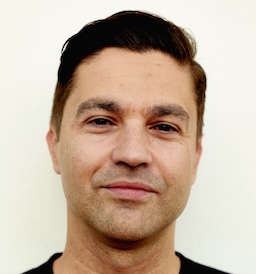
I am Slobodan Manić, former CTO of Search Engine Journal, WordPress core contributor, and author of the Machine-First Architecture framework. I optimise websites so they work for machines first and humans always.
Every engagement starts with a complete issue register: performance bottlenecks, accessibility violations, semantic errors, structured data gaps, and AI extractability failures. I work through every item on the register - not the top ten, every one - until it is empty, or until a genuine technical constraint forces a documented trade-off.
The deliverable isn't a better website. It is a website that passes every audit, renders critical data without JavaScript, and gets cited by ChatGPT, Perplexity, and Google AI Overviews because the content is structured to be cited.
Why "Good Enough" Is Costing You
When a website neglects accessibility, semantic structure, and speed, it bleeds revenue and disappears from AI-powered search. Three specific failures cause most of the damage:
- Wasted ad spend: Pages that take more than 3 seconds to load lose roughly 40% of visitors before the first interaction. Slow Core Web Vitals also lower Google Ads Quality Score, which raises cost-per-acquisition on every campaign.
- AI invisibility: Large language models select around 380 words per page when deciding what to cite. Without named entities, explicit relationships, and citable anchor sentences, ChatGPT, Perplexity, and Google AI Overviews skip the page entirely - regardless of how much content it contains.
- Legal & market risk: Roughly 1 in 4 adults in the United States lives with a disability. Sites that fail WCAG 2.2 AA exclude those users and create direct exposure under the ADA and the European Accessibility Act, which became enforceable in June 2025.
Small defects compound over time - each one a small leak in your conversion funnel, a barrier to a potential customer, or a signal to AI systems that your site isn't trustworthy. The discipline I bring is to find and fix all of them, not just the ones a generic audit tool flags.
I don't leave leaks.
The Machine-First Protocol: Three Phases to a Citable Website
I don't sell open-ended hours or vague consulting. I deliver total resolution through a rigorous process that leaves nothing unfixed.
Technical Audit & Roadmap
I audit every page template, every reusable component, every asset, and every JSON-LD block on the site.
The audit measures your site against the four pillars of Machine-First Architecture: Identity (canonical entity definition and sameAs graph), Structure (server-rendered data and schema hierarchy), Content (answer-first, citable passages), and Interaction (machine-readable actions for agents). The deliverable is a complete issue register - not a prioritised shortlist - with every defect documented and tied to the pillar it violates.
Implementation
This is the longest phase. We work through the entire issue register together - the critical items and the small ones. Every issue documented in the audit gets addressed: resolved, or if there is a genuine constraint, documented with a clear rationale.
You have two options:
- Direct implementation: My team handles the fixes under my supervision. You get a website that passes every audit with flying colours.
- Technical oversight: Your team implements the fixes. I review every change and don't sign off until it meets the standard.
Monitoring & Maintenance
A flawless website today can degrade tomorrow. Plugin updates, content changes, new features - each is an opportunity for regressions to creep in.
I monitor continuously. When something breaks, you know immediately. We fix it before your users (or Google, or AI agents) ever notice.
Why This Approach Works - Why I Can Promise This
Anyone can hand you a report full of red warnings. The difference is what happens next - whether those issues actually get fixed, or sit in a backlog forever.
Machine-First Architecture is a methodology, not a checklist. Every defect on the issue register gets resolved against the four pillars - Identity, Structure, Content, and Interaction - not just the ones that move a single metric.
The Depth to Deliver
- Former CTO of Search Engine Journal: I led engineering at one of the largest publications in the SEO industry, where the technical decisions I shipped were read, scrutinised, and replicated by hundreds of thousands of search professionals every month.
- Author of Machine-First Architecture: I wrote the Machine-First Architecture framework, a four-pillar methodology (Identity, Structure, Content, Interaction) for building digital ecosystems that AI agents and humans can both use. Every audit I run is grounded in it.
- Five-time WordPress core contributor: 15+ years of engineering experience with brands including Instacart and Klarna. I don't just use the software - I have shipped code to the WordPress core five separate times.
- CXL-certified CRO professional: Conversion Rate Optimization certification from CXL, the industry's most rigorous CRO programme. Every performance fix on your site is evaluated against whether it actually moves revenue, not just whether it improves a Lighthouse score.
- Full-stack context: I bridge backend and frontend performance, UX, and technical SEO. I work with the entire system, not just the surface.
- Standards-based development: I ship semantic, valid HTML and server-rendered structured data that works for humans today and is extractable by AI agents tomorrow - no shortcuts, no hacks.
Built on Engineering Principles
- What actually moves the needle. You get a roadmap based on engineering reality, not guesswork. I isolate the critical architectural fixes that drive speed and stability, so you stop wasting budget on cosmetic tweaks that don't move the needle.
- Seeing what others miss. I see the technical debt your team is blind to. I look past the visual layer and into the source code to uncover the deep structural bottlenecks that generic audit tools miss.
- Built to last. I don't use shortcuts or hacks. I implement valid, semantic standards. This ensures your site remains fast for users, accessible to everyone, and readable for AI agents long after our engagement ends.
FAQ - Frequently Asked Questions
Common questions about my website optimisation services and process.
What is included in a technical website audit?
A complete analysis of every page template, component, and asset on your site - covering Core Web Vitals, WCAG 2.2 AA accessibility, semantic HTML, JSON-LD structured data, server-side rendering, and AI extractability. The deliverable is a comprehensive issue register that documents every problem against the four pillars of the Machine-First Architecture framework, not a prioritised shortlist.
How long does the optimisation process take?
The initial audit takes 1-2 weeks. Implementation timelines vary based on scope, but most clients see measurable improvements within 90 days.
Do you work with e-commerce sites?
Yes. E-commerce is one of my primary focus areas. I specialise in optimising product pages, checkout flows, and site-wide performance for online stores.
What makes your approach different?
Two things. First, I fix everything - I document every issue and resolve every one of them, not just the high-impact items. Second, I run every audit against the Machine-First Architecture framework I authored, which evaluates Identity, Structure, Content, and Interaction as four interlocking pillars rather than a checklist of isolated SEO tactics. Combined with my background as former CTO of Search Engine Journal and a WordPress core contributor, that means the audit is grounded in production engineering, not theory.
What if some issues can't be fixed?
Occasionally, there are genuine constraints - a third-party script you can't control, a legacy system that can't be changed, a business requirement that conflicts with best practice. In those cases, I document the issue, explain the trade-off, and we make an informed decision together. But "it's too hard" or "it's low priority" are not acceptable reasons to leave issues unfixed.
What results can I expect?
Typical outcomes include faster page loads, improved Core Web Vitals scores, better accessibility compliance, and increased conversion rates. Exact results depend on your starting point.
How do you handle ongoing maintenance?
After implementation, I offer monitoring services to catch regressions in performance, accessibility, or AI-readiness before they impact your users.
Ready for Humans and AI Agents?
The first step for any engagement is a free discovery & scoping session. This includes a personal preliminary review of your site, a 60-minute 1-on-1 strategy call, and a tangible plan with a custom proposal and a firm quote for the full Technical Website Audit.